Is Occupational Therapy the Career Path for You?
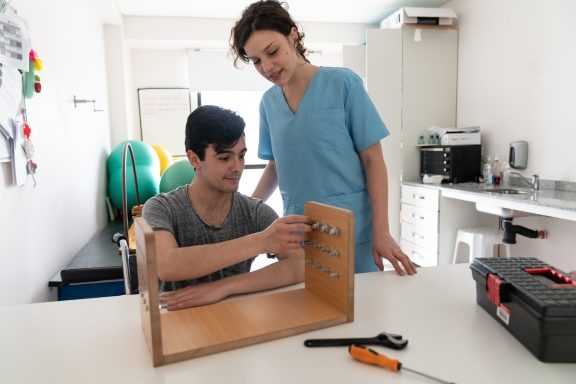
Occupational Therapy (OT) is an in demand career path that helps people build or regain the skills they need for daily life - at home, school, work, and in the community. OTs collaborate with social workers, physical therapists, speech and language pathlogogists, psychologists across hospitals, clinics, schools, and homes, serving children, older adults, veterans, stroke survivors, and more.
OT Might Be a Good Fit If . . .
-
You enjoy problem-solving, creativity, and coaching people through change
-
Your strengths are compassion, patience, communication, and critical thinking
-
You are comfortable working on interprofessional teams and adapting to different settings
Occupational Therapy Specializations
There are many different specialties that OTs can focus on - many blend more than one specialization over their career.
-
Pediatrics: early intervention, schools, NICU
-
Gerontology & Aging: falls, dementia care, aging-in-place
-
Physical Rehabilitation:post-surgical, orthopedic, general rehab
-
Neurologic Rehabilitation: stroke, TBI, SCI, MS, Parkinson’s
-
Hand & Upper Extremity: post-op care, tendon/nerve rehab, splinting
-
Low Vision Rehabilitation: visual function, safety, compensatory tech
-
Feeding, Eating & Swallowing: peds feeding, dysphagia
-
Assistive Technology & Seating/Mobility: AAC, access, wheelchairs
-
Home Modifications & Universal Design: safety, accessibility
-
Work & Industry/Ergonomics: return-to-work, injury prevention
-
Acute Care & ICU: early mobilization, delirium prevention, ADLs
Careers Settings
OTs have flexibility to work in a variety of settings providing job seekers with many different options.
Hospitals & Rehab Centers: acute care, inpatient rehab, outpatient neuro/ortho
-
Schools & Early Intervention: IEPs, sensory and motor development
-
Home Health & Community: safety, routines, caregiver training, aging-in-place
-
Work & Industry: ergonomics, return-to-work, hand therapy clinics
-
Specialty Clinics: oncology, pelvic health, low vision, driver rehab, lymphedema

Interested in Becoming an OT?
Academics
-
Focus on science courses: Biology, Chemistry, Anatomy/Physiology, and Physics if available.
-
Take psychology or sociology: These build a foundation for understanding human behavior.
-
Challenge yourself in math: Data skills are important for evidence-based practice; statistics and calculus are recommended.
-
AP courses: Take AP's in sciences or psychology, if your school offers them.
Major: You can major in anything (e.g., psychology, sociology), but a health science path in biology, kinesiology, or anatomy/physiology will help fulfill necessary prerequisites.
Experiences
-
Volunteer/shadow: Getting immersed in hospitals, rehab centers, nursing homes, schools, or community disability programs will give prospective an understanding of what is involved in this career path.
-
Part-time work: Working in jobs like lifeguarding, tutoring, babysitting, or caregiving build people skills.
-
Clubs & activities: Get involved in extracurriculars that focus on helping others.
Skills to Develop
-
Communication: Practice active listening, empathy, and teamwork.
-
Creativity: OTs often use crafts, games, or adaptive tools- find ways to build your problem-solving side.
-
Leadership & service: Take initiative in school or community projects.

Demand & Salary Snapshot
OT is a hot career path! This is a growing sector and there is high need for qualified OTs.
Job outlook: +11% anticipated growth (faster than average) from 2023–2033.
-
U.S. median salary: $98,340 (May 2024, across all of US).
-
California median: ~$119,000; hourly median ~$57.44. Regional medians can be higher (e.g., Bay Area).
Final Thoughts
Occupational Therapy is more than just a career - it’s a calling to help people live fuller, more independent lives. With strong job growth, diverse specializations, and meaningful daily work, OTs make an impact across all ages and settings. If you’re compassionate, curious, and ready to combine science with creativity, OT could be the perfect fit.
Ready to start your journey? Take the next step by researching the career, connecting with current students or practitioners, and picturing the kind of OT you want to become—the opportunities are endless!