Beyond the 504 and IEP: How Students with Learning Differences Can Thrive in College

The transition to college is exciting, but for students with learning differences, it comes with a few extra considerations. Accommodations that were automatic in high school don’t always transfer seamlessly to higher education. The good news: with the right preparation and support, students with learning differences can thrive in college.
504 vs. IEP: What Carries Over to College?
One of the most common questions families ask is: Will my student’s high school plan carry over?
-
IEP (Individualized Education Program): This is part of the K-12 public school system and does not carry into college.
-
504 Plan: This falls under the Rehabilitation Act of 1973 and entitles students to reasonable accommodations in college.
It’s important to note that colleges cannot ask about IEPs or 504s on applications. Whether a student chooses to disclose their learning difference in an essay or interview is entirely up to them. However, disclosing a learning difference can help colleges understand struggles with courses and lower grades.

Understanding Your Learning Difference
The most successful college students with learning differences are those who know themselves well. Encourage your student to:
-
Understand their specific diagnosis and challenges.
-
Be clear on which accommodations help and why.
-
Practice advocating for themselves in high school, so they’re ready to speak up in college.
Self-advocacy is a lifelong skill that will serve them far beyond the classroom.

Research Disability Services at Each College
While all colleges are legally required to provide accommodations, the level of support varies widely. Families should:
-
Research services: Some schools offer only the basics, while others provide robust programs (sometimes for an additional fee) including one-on-one coaching, tutoring, workshops, or assistive technologies.
-
Contact the Disability Resource Office: Ask what documentation is required and whether recent testing is needed. Some schools won’t accept evaluations that are more than 2-3 years old.
-
Visit in person: If possible, meet staff, tour the support center, and get a feel for how accessible services will be.
Doing this research before committing can make all the difference in a smooth transition.
Make the Campus Feel Familiar
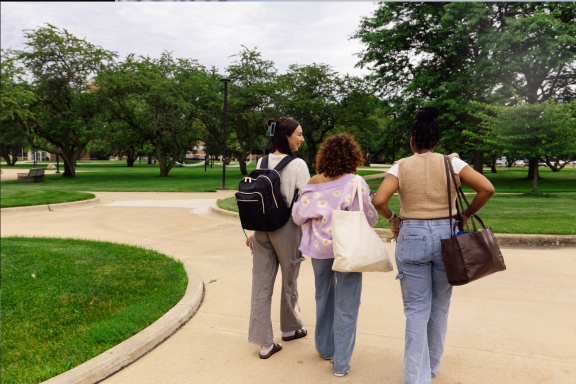
For students prone to anxiety, a little preparation goes a long way. Visiting campus multiple times before move-in can help:
-
Reduce the “unknowns.”
-
Build confidence navigating buildings, classrooms, and dining halls.
-
Make the college environment feel friendlier and more manageable.
Mastering Time Management
Unlike high school, college doesn’t run on a predictable 8:30-3:00 schedule. Classes may meet only two or three times a week, leaving large blocks of unstructured time. Students with learning differences often benefit from:
-
A weekly planner or digital calendar.
-
Breaking assignments into smaller, manageable steps.
-
Building routines for studying, meals, and sleep.
Time management is not just a skill - it’s a survival strategy in college.

Medications & Therapy Across State Lines
For students taking medication or receiving therapy, there are logistical steps to plan ahead:
-
Prescriptions: Medications like ADHD treatments often can’t be shipped across state lines. Families may need to coordinate with a local pharmacy near campus or transfer prescriptions to a new provider.
-
Therapy: Many therapists can’t practice across state borders. Look into telehealth rules or line up a local therapist before the semester begins.
These details may seem small, but handling them in advance prevents stress once classes start.

Colleges with Strong Learning Difference Support Programs
Here are 6 colleges known for their remarkable support for students with learning differences:
-
Beacon College (FL)
A college exclusively serving students with learning differences - offering life coaching, peer tutoring, writing/math labs, and career services. -
Landmark College (VT)
Designed solely for students who learn differently (e.g., dyslexia, ADHD, autism), with integrated supports and small classes. -
Hofstra University (NY) - PALS Program (Program for Academic Learning Skills)
One-on-one weekly learning specialist sessions to build executive function and academic strategies. -
Adelphi University (NY) - Learning Resource Program & Bridges to Adelphi
Offers tutoring, counseling, priority registration, and autism-specific support. -
University of Arizona (AZ) - SALT Center (Strategic Alternative Learning Techniques)
Provides academic coaching, assistive tech, tutoring, workshops, and social integration support. -
University of Denver (CO) - LEP (Learning Effectiveness Program)
Focused on executive functioning, academic coaching, and peer mentoring.
Final Thoughts
College can be a transformative and empowering experience for students with learning differences. The key is preparation: understanding one’s needs, researching resources, and building self-advocacy skills. With the right planning and support, students don’t just “get by” in college, they thrive.
Make It U College Consulting offers personalized guidance on college ilst building, testing plans, essay strategy, application assistance and much more.
Book a free consultation with Kris today and
Find Your Path to College with Less Stress and More Success!

Subscribe to the College Insider newsletter and blog to receive exclusive tips and advice!
Thank you for subscribing!
Have a great day!